Discovering Hazel

Hazel Scott

Hazel Scott’s in the Movies

I first saw her years ago while stumbling on a late-night showing of the 1945 movie “Rhapsody in Blue” starring Robert Alda as George Gershwin, where she introduces him to the Paris high society while performing a haunting version of the “Man I Love” in a fancy jazz club.

I unsuccessfully searched and searched for more information about this musician since her role in that movie was not credited, but then, years later, I saw the amazing two-piano performance of Alicia Keys at the 2019 Grammys, paying homage to Scott, which led me down the online rabbit hole to discover all that I could about this incredible woman.

Discovering Hazel
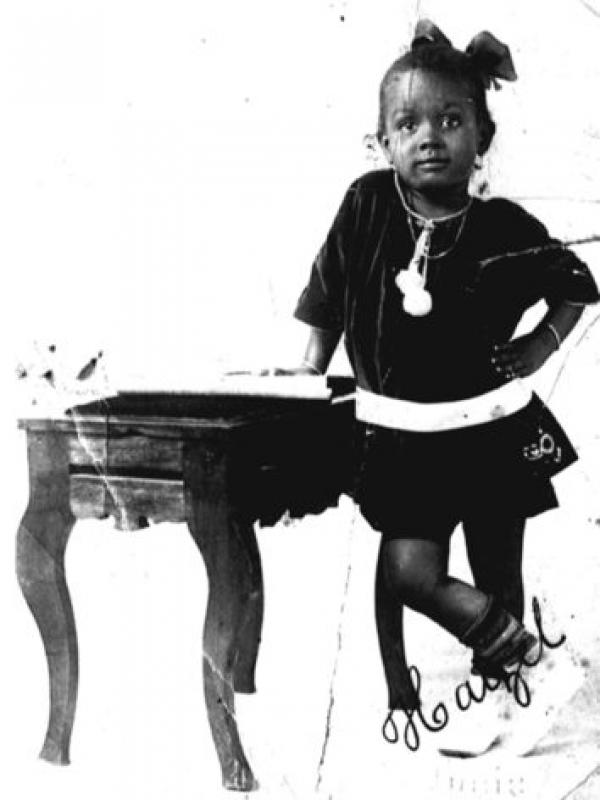
Hazel Scott posing by a miniature piano
Hazel Scott circa 8 years old

Hazel’s F.A.Q.

Born on June 11, 1920, in Trinidad and Tobago, Scott’s musical journey began at a young age, as she demonstrated an innate gift for the piano and a passion for performance that would propel her to international acclaim. She enrolled at Julliard school of Music at the tender age of 8 years old making her the youngest student ever at the time. Scott’s rise to fame came during the golden age of jazz in the 1930s and ’40s, where she quickly established herself as one of the preeminent pianists of her time. With her virtuosic technique, dynamic stage presence, and captivating personality, Scott enthralled audiences in venues across the United States and beyond, earning rave reviews and adoration wherever she performed.

Pianists on TV

Starting in the 1950, the Hazel Scott Show gave her national exposure until it was cancelled under allegations of the oppressive McCarthyism environment. She was at the forefront of many entertainment shows that would feature pianist like; Liberace, Sidney Harrison, Alec Templeton, Isador Goodman, Winifred Atwell, Milton Saunders, Victor Borge and many others.


But Scott was more than just a talented musician; she was also a trailblazer for racial and gender equality in the entertainment industry. At a time when segregation and discrimination were rampant, Scott fearlessly challenged the status quo, refusing to perform in venues that enforced segregation and advocating for equal rights for all.

In addition to her groundbreaking activism, Scott’s musical contributions were equally revolutionary. She seamlessly blended jazz, classical, and popular music styles, creating a sound uniquely her own that defied categorization and captivated listeners of all backgrounds. Her innovative approach to the piano, characterized by her impeccable technique, improvisational prowess, and soulful interpretations, set her apart as a true pioneer in the world of music.

Hazel in the movies

Scott’s impact extended far beyond the stage; she was also a trailblazer in the world of film and television. As one of the first African-American women to achieve success in Hollywood, Scott broke down barriers and paved the way for future generations of performers. Her work in films like “The Heat’s On” and “Rhapsody in Blue” showcased her versatility as both a musician and an actress, earning her critical acclaim and further solidifying her place in history. Check out her IMDB

Hazel in Paris

In the mid-50’s she moved to Paris with her husband American congressman Adam Clayton Powell Jr. and performed all over Europe until the mid-60’s

Hazel’s and the legends of Jazz

Despite facing numerous challenges and obstacles throughout her career, Scott remained unwavering in her commitment to her art and her principles. She continued to perform and advocate for social justice until her untimely death in 1981, leaving behind a legacy that continues to inspire and resonate with audiences today.

Hazel Scott’s contributions to music, activism, and cultural advancement are immeasurable. Her pioneering spirit, unmatched talent, and unwavering dedication to her craft have left an indelible mark on the world of music and beyond, ensuring that her legacy will continue to inspire future generations for years to come. As we celebrate her life and accomplishments, we honor not only her extraordinary talent but also her fearless commitment to justice, equality, and the pursuit of excellence.

The Forgotten Virtuoso: Discovering Joseph Bologne, Le Chevalier de Saint-Georges

Joseph Bologne

How a small-town music lover in Quebec led our family to uncover one of history’s most remarkable musicians

My father-in-law, Marc Sr, is the avid classical and opera enthusiast in question. He lives in a small mining town in Quebec, and what started as his personal musical exploration turned into somewhat of an obsession, so much so that he began organizing community events to share his incredible find with others.

The object of his enthusiasm? Joseph Bologne, also known as Le Chevalier de Saint-Georges and, more controversially, the “Black Mozart”.

A Life Straight Out of Legend

Saint-Georges was a celebrated biracial violinist, composer, and conductor in 18th-century France (1770-1780). But calling him just a musician barely scratches the surface of this Renaissance man’s achievements. He was multifaceted, multi-talented, and lived a life so remarkable it seems almost fictional. Born on Christmas Day, 1745, in Guadeloupe, Joseph’s story begins with both privilege and controversy. His mother was a young, enslaved Senegalese woman; his father, Georges Bologne, was her wealthy, married owner. In a progressive move for the time, Georges acknowledged his illegitimate son, gave him his surname, and made a life-changing decision that Joseph would have better opportunities in France.

This pivotal choice altered young Joseph’s entire trajectory and meant access to:

  • First-class education, including intensive musical training
  • Elite sports training – he became a renowned equestrian and fencer
  • Military leadership (later on during the revolution)
  • High society, where he also gained a reputation as an elegant dancer

Rising Through the Musical Ranks

Saint-Georges’ first major musical performance was with an orchestra at Le Concert des Amateurs. His talent was undeniable – within a few years, they appointed him concert master, and he soon debuted as a soloist.

But success came with challenges. Despite his free status, he faced significant racism in pre-Revolutionary France. The derogatory term “mulatto” followed him, and racist laws limited his career advancement opportunities.

The “Black Mozart” Controversy

The nickname “Black Mozart” has sparked considerable debate among music historians and scholars. Here’s what we know:

The Timeline: When young Mozart moved to France, Chevalier was already established in Marie Antoinette’s court. Mozart was just beginning to seek work and establish himself.

The Musical Influence: While it’s unknown whether Mozart heard Saint-Georges’ music during his French period, documented evidence suggests Mozart’s later compositions contained elements reminiscent of Saint-Georges’ style.

The Problem with the Name: Some argue “Black Mozart” implies Saint-Georges copied Mozart’s style – but the evidence suggests it may have been the other way around. More importantly, many find the comparison discredits Saint-Georges’ unique musical ability and integrity while perpetuating racial bias.

From History to Hollywood: The “Chevalier” Film

The Screenwriter’s Vision

Award-winning television screenwriter Stefani Robinson first encountered Saint-Georges’ story in high school through a book her mother gave her. The impact was immediate and lasting – she described it as reading about “a superhero no one had ever heard of.”

When the opportunity arose to write for film, Saint-Georges’ story was her first choice. This became her mission: expose this underrated historical figure on the big screen.

Bringing Authenticity to the Screen

Canadian director Stephen Williams faced the monumental task of bringing this historical story to life authentically while making it cinematically compelling. Key artistic decisions included:

  • No stunt doubles for fighting or musical scenes
  • Modern influences like Prince and Jimi Hendrix, used to highlight Chevalier’s “rock star” qualities
  • Historical accuracy balanced with contemporary relevance

The Perfect Leading Man

Kelvin Harrison Jr., born in New Orleans to a musical family, seemed destined for the role. His preparation was intense:

  • Daily practice sessions with his father to revamp his violin skills
  • Additional musical coaching during production
  • Fencing training from his previous role in “Cyrano”

Between his musical background and physical preparation, Kelvin truly embodied the virtuosity and showmanship that defined the real Chevalier.

The Musical Legacy Lives On

Rediscovering Lost Masterpieces

Much of Saint-Georges’ work was lost during the French Revolution, but recent efforts have focused on restoration and performance of surviving pieces. While most of his operas disappeared, “L’amant anonyme” (1780) remains, along with fragments of others.

His surviving works include:

  • Concertos
  • Symphonies
  • Chamber music

The Film’s Musical Authenticity

The “Chevalier” film soundtrack featured both historical and contemporary elements:

  • Saint-Georges’ original compositions reworked for various scenes
  • Contributions from award-winning composers Michael Abels and Kris Bowers
  • Period-accurate sound techniques using string manipulation and detuning
  • Featured piece: “Violin Concerto in G Major, Op. 8, No. 2: I. Allegro”

The soundtrack was released by Hollywood Records on April 21, 2023, exactly one year after the film premiered at the 2022 Toronto International Film Festival (TIFF).

Chevalier’s Final Bow: Why This Matters Today

If it weren’t for my father-in-law’s passionate discovery in small-town Quebec, our family might never have learned about Joseph Bologne, Le Chevalier de Saint-Georges. His story represents something larger than individual achievement – it’s about recognizing overlooked voices in classical music history.

Between ongoing efforts to restore his music and the recent film release, Saint-Georges’ musical legacy continues to resonate with new audiences. The hope is that future generations of music scholars – and music lovers like us – will ensure his contributions are never forgotten again.

Bravo, Chevalier de Saint-Georges. Bravo!

“Goodbye” Oscar

Oscar Peterson

Peterson’s Soulful Tribute to Benny Goodman

In this video performance that I recently discovered; Canadian jazz legend Oscar Peterson‘s plays “Goodbye,”, which was a beautiful ballad that served as the closing theme of Benny Goodman’s Big Band radio show in 1935

Filmed during a 1965 European tour in Holland, Peterson performed on Dutch TV with his trio—Ray Brown on acoustic bass and Ed Thigpen on drums. The intimate setting provided the perfect background for Peterson’s interpretation

Goodman’s Signature Farewell

Composed by Gordon Jenkins, the piece is arranged in a distinctive A/B/A form to fit the time slot before the next radio broadcast. That subtle change gave the tune a signature shape and feel, separating it from other ballads of its time.

Watch the Performance

Right before launching into the piece, Oscar speaks directly to the studio audience, sharing his deep affection for the song. I’m sure he must have heard it during his youth on Montreal radio stations and mentions his most recent recording of it with the Nelson Riddle Orchestra.

Marc’s Breakdown

What makes Oscar’s interpretation so compelling is how he deconstructs and reconstructs the harmony of the piece. The performance begins solo and out of tempo, exploring the emotional space between C minor and C major. This approach gives him the freedom to introduce rich harmonic voicings, far beyond the original structure.

Some key highlights include:

  • Sweeping arpeggios that span the full range of the keyboard
  • Two-handed scales executed with perfect rhythmic precision
  • Subtle counter-melodies that dance beneath the main theme

When the trio finally joins in at the head of the tune, the performance evolves into a full-bodied jazz ballad, blending technical mastery with emotional nuance.

A Masterclass in Jazz Expression

Oscar Peterson’s performance of “Goodbye” is more than a tribute—it’s a masterclass in jazz balladry and pianistic brilliance. It reminds us that in the hands of a true artist, a simple melody can become an exploration of memory, identity, and timeless beauty.

Whether you’re a lifelong jazz fan or new to the genre, this rendition is essential listening—a must-see piece of jazz history.

Listen to other covers of “Goodbye”

Ernest Ranglin Jamaican Guitar “Royalty”

Below-The-Bassline-Ernest-Ranglin

Self-Discovery with Music Excellence

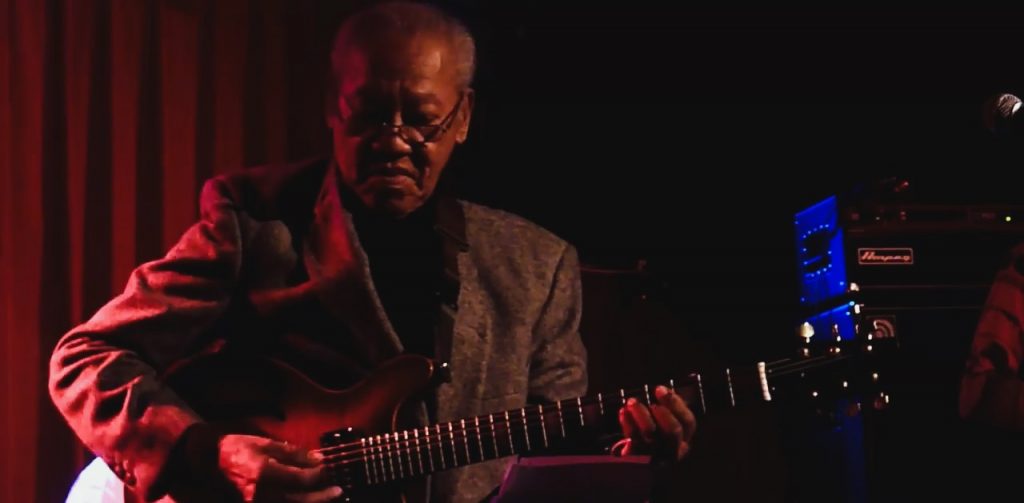
AAs someone of Jamaican heritage, a jazz enthusiast, and a music graduate, I was astonished to discover that I had never heard of the legendary Jamaican jazz guitarist, Ernest Ranglin. Although I can’t recall the source, I learned that he was performing at the Montreal Bistro, a now-closed jazz club in Toronto, that very night. This revelation left me perplexed, but it motivated me to go and see him perform for myself.

I remember that it was standing room only in the club that night. The atmosphere buzzed with energy as the music reverberated throughout the venue. I was already excited by what I had heard so far, so I squeezed into a spot in the crowd. I quickly became mesmerized by the music and captivated by Ernest’s playing. His calm demeanor contrasted with his dexterous technique, as staccato riffs flowed effortlessly from his guitar.

I was amazed by the unique fusion of musical genres. The jazz elements I learned at university blended with the R&B I listened to on the radio, along with the reggae and ska from my parents’ record collection. They had a small collection of vinyl 45s that introduced me to ska, a more upbeat style of reggae. Unbeknownst to me at that time, Ernest Ranglin played an important role on one of those “hit” ska records!

werwerwr

Ranglin’s Musical Beginnings

  • Born Ernest Adheir Ranglin was born in Manchester Parish, a rural community in Jamaica and was first introduced to the guitar by two uncles who taught him guitar rudiments and bought him a ukulele to start him off on his musical journey
  • When his family moved to Jamaica’s capital, Kingston, that placed him closer to the vibrant music scene in which he became an integral participant
  • Ranglin continued to study from guitar books and late-night sessions watching Jamaican dance bands, so he is essentially self-taught
  • He was also influenced by many American jazz musicians whom he listened to and emulated, such as jazz guitarist Charlie Christian and trumpeter Dizzy Gillespie
  • His early gigs included playing with local orchestras, particularly the Val Bennett Orchestra and the Eric Deans Orchestra, where he picked up valuable orchestration and arranging skills

Ernest Plays with Bob’s Wailers and other Notables

Ranglin’s guitar style also evolved through the early forms of Jamaican music, from mento to calypso, rocksteady, and reggae. He was instrumental in the development of the rhythmic guitar style of ska and played on several Calypso and Mento-style recordings for the tourist and hotel circuits.

  • Ernest Ranglin’s notable recordings include “Shuffling Jug,” widely regarded as one of the first ska records, recorded with Clue J & His Blues Blasters for renowned record producer Clement ‘Coxsone’ Dodd
  • Ranglin, 13 years older than Marley, crossed paths in the early 1960s at Studio One in Kingston, where Marley and his group, The Wailers were recording their first hit “It Hurts To Be Alone”, Ranglin playing a pivotal role in arranging and playing guitar on the song
  • He recorded at least 30 albums under his own name including “Mod Mod Ranglin” for Federal Records, “Below The Bassline” for Island Jamaica Jazz, and “In Search of the Lost Riddim” featuring collaborations with Baaba Maal and Sly & Robbie
  • His recording career took off as he was in demand, playing on countless recordings either as leader or collaboratively, with artists like Floyd Lloyd, Bunny Wailer, and Jimmy Cliff, to name a few. He also recorded with renowned pianist and lifelong friend Monty Alexander, with whom he collaborated on over a dozen albums, including “Rock Steady”
https://youtu.be/Nty-4vUmh-s

From Jamaica to UK with love

Ranglin’s talent caught the attention of Chris Blackwell, the founder of Island Records. He called Ranglin “the most important musician to have emerged from Jamaica”. Ranglin released his first solo album on the label, Guitar in Ernest. When Blackwell relocated the record company to the UK, he wanted to expose his roster of artists to an international audience. He arranged for Ranglin to audition for London’s famous jazz club, Ronnie Scott’s, which led to a steady gig for Ranglin, where he garnered multiple accolades and a new base of UK fans and audiences.

Album cover of With Friends Playing Guitar Ernest Ranglin, with unidentified trio

Check out Ernest Ranglin’s jazz guitar skills on the 1940’s jazz standard “Polka Dots and Moonbeams” written by Jimmy Van Heusen (music) & Johnny Burke (lyrics).

Ernest & Millie’s Hit Record

And now back to the hit ska record that Ranglin played on! In 1964, Ernest was hired as musical director to arrange and perform on a song that became a massive hit for a young 17-year-old singer. It sold millions of copies in both the UK and the US, and was the best selling ska record and a breakthrough for Island Records on the international stage.

His work as musical director on Millie Small’s international ska crossover hit is another landmark recording, with Ranglin credited for the arrangement

The singer was Millie Small, and the song was “My Boy Lollipop.” Small was a Jamaican singer that Blackwell brought to the UK to help launch her career, as he did for Ranglin. Blackwell was searching for a song for her to record and decided on a song from his extensive record collection. “My Boy Lollipop,” was originally recorded by American singer Bobby Gaye in 1956.

I remember that little vinyl record, with no art or graphics, just plain print. This song played throughout my childhood, only by my parents. After all, it sounded so old-fashioned to us, and we were not particularly interested. Little did we know it played an important role in promoting Jamaican artists and music

Perhaps subconsciously, I felt a connection with Ranglin when hearing him for the first time. Like a familiar feeling through the culture and the music. And then finding out he played a part in Millie’s My Boy Lollipop record, it kinda made sense.

Sir Ernest Ranglin…

One day, I came up with the title “Sir” Ernest Ranglin, and it stuck, at least for me. As I continued to attend many of his performances, I can attest to his extraordinary talent and the joyous experiences he brought to his fellow musicians and his audiences. His artistry transcends musical boundaries and naturally draws everyone together. The Jamaican government honored him with The Order of Distinction (1973) and the Order of Jamaica (2021). Known as “the king of ska guitar,”

I’ve decided that Sir Ernest Ranglin, is a title he has earned for his outstanding “royal” talent and contribution to the music world.

Moi & my sister posing with Ernest at Lulu Lounge in Toronto, 2015.

Stewart Goodyear: Tchaikovsky on the piano

Stewart Goodyear Piano recital


Reviving a Lost Art: The Renaissance of Piano Transcriptions

Watching Stewart Goodyear who’s one of Canada’s finest classical pianists, taken it upon himself to revive the 19th-century tradition of adapting orchestral masterworks for solo piano performance is absolutely mesmerizing. During the Romantic era and early part of the 20th century, pianists would transform symphonic works into virtuosic solo pieces to perform in concerts as a source of income.  

The Golden Age of Piano Transcription

In this 2015 live performance at Toronto’s Koerner Hall, Scott who is an Artist-in-Residence at the Royal Conservatory of Music presented his transcription of Tchaikovsky’s Nutcracker’s ballet symphony distilled through the piano which revealed some inner voices, harmonic progressions, and structural elements that I had frankly never really heard before in full orchestral performances.


Stewart Goodyear: Carrying the Torch Forward

    • 1:15:12 Dance of the sugar plum fairy

Masters of the Transcription Art

Tchaikovsky’s ballet has inspired numerous pianists to create solo arrangements. Mikhail Pletnev’s 1978 transcription stands as one of the most celebrated, transforming the orchestral colors into pianistic brilliance. Giuseppe Albanese and Maria Nemtsova have also created notable interpretations, each bringing their own perspective to the challenge of capturing the ballet’s magic through solo piano.

Here are some more of history’s most legendary examples that includes:

    • Franz Liszt’s transcriptions of Beethoven’s symphonies – Perhaps the most famous of all transcriptions, Liszt’s arrangements of all nine Beethoven symphonies are a tour de force for solo piano.

    • Leopold Godowsky’s Chopin Études – These difficult arrangements take Chopin’s already challenging études and layer them with additional melodic lines, creating some of the most technically demanding music ever written for piano that French Canadian pianist like Marc Andre-Hamelin specializes in.

    • Ferruccio Busoni’s Bach transcriptions – Busoni’s arrangements of Bach’s organ works, particularly the Chaconne from the Partita No. 2, expanded the expressive possibilities of the piano while honoring the Baroque master’s architectural brilliance.

The Schultz Effect

Justin Lee Schultz Keyboard prodigy

South Africa’s Jazz Prodigy upholds The “Lingus” legacy

I first discovered the young South African prodigy Justin Lee-Schultz during the pandemic. His keyboard solo especially took me during a performance of an original composition called “Domino Effect.” It was recorded in 2023 with Carlton Whitfield’s 10-piece gospel fusion band “What’s Your Take,” which runs a podcast that showcases the best musical talent in the world. The band is created from the participants of the show and, in this case, brought together 10 musicians who met for the first time, with only 3 days to pull off a live recording.

New Voice in Jazz Fusion

Schultz’s solo on “Domino Effect” showcases how jazz fusion continues evolving through younger generations. The jazz fusion genre emerged in the late 1960s, when musicians blended jazz harmony and improvisation with elements of rock music, funk, and rhythm and blues. This performance is respectful of the genre’s heritage while showcasing Schultz’s unique/amazing musicality.

Marc’s Breakdown: Domino Effect

  • 5/4 time signature
  • Complex harmonies which shift between these three distinct tonalities: Intro Theme – Eb Major; Shout Chorus/Bridge -unrelated key -B Major; Solo Section and Outro -G Major
  • Justin’s solo begins around 2.5 minutes into the track, starting off slowly
  • He navigates the harmonies through rapid-fire runs that include triads and poly-rhythmic pentatonic scales that challenge one’s ear
  • The rhythm section builds up the intensity while he starts to solo with both hands around the 4minute mark and culminates in quick, intricate runs producing a high-energy performance
  • Effective use of gear with the Roland V-Stage stage 88 full-piano and Moog Synth

Lingus Solo

When I heard Schultz’s solo, it brought to my mind the Grammy award-winning keyboardist Corey Henry, who also played an epic solo on a Snarky Puppy composition from their album We Like It Here, released in 2014. At that time, the original video of Henry’s solo on the “Lingus” track went viral on social media. He played with the renowned jazz fusion band until 2018.

https://youtu.be/7VbCb0BE9XQ

Marc’s Breakdown: Lingus

  • 4/4 time signature
  • The solo starts at the 5 min range with simple, blues-based patterns, progressively becoming more complex and intense
  • Henry employs different scales and modes, including the E minor scale at the start of his solo
  • The harmony then shifts, and he uses the G major scale and the Mixolydian mode on C
  • He adds more advanced jazz techniques like block chords and Phrygian dominant scales and uses quartal harmony (chords built on intervals of a fourth), for a more modern sound
  • He plays with the time signature, using sync
  • opation and a “stabby” rhythmic feel to create a sense of tension with the complicity of Toronto’s Larnell Lewis on drums

The Genre of Jazz Fusion Prevails

These two solos demonstrate the phenomenon of young prodigies expressing themselves in traditional genres. They both possess that rare quality that cannot be taught—an innate understanding of rhythm, melody, and emotional expression that transcends technical proficiency alone.

When they play, there’s a palpable sense of authenticity and spontaneity as both players take risks in their performances, exploring harmonic and rhythmic territories with the fearlessness of youth combined with the wisdom of seasoned professionals.